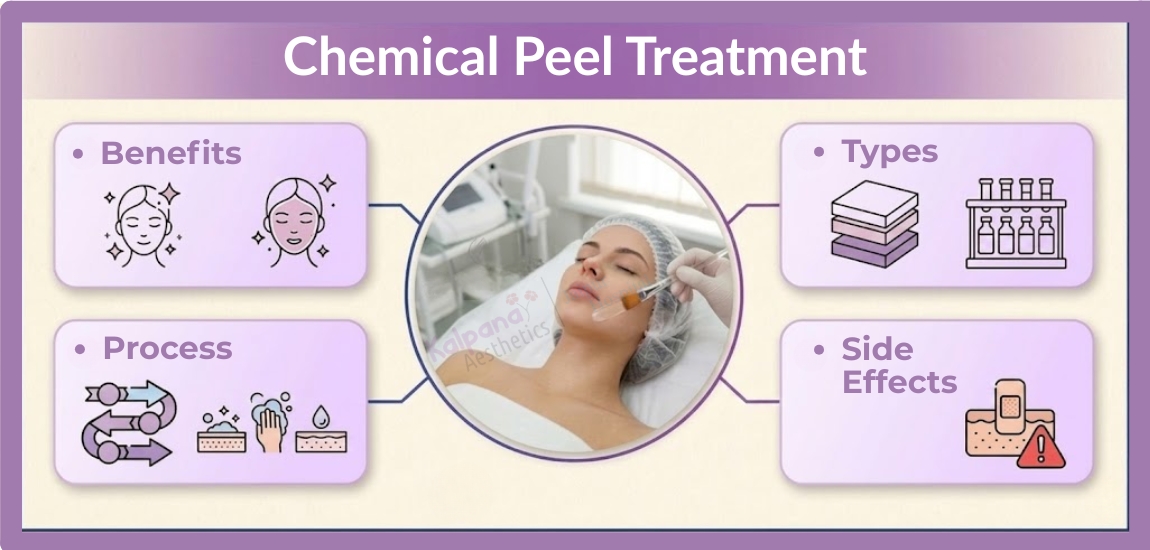
Introduction to Chemical Peel Treatment
In the present fast-paced world, skin problems like dullness, acne and pigmentation have become common. Due to lifestyle changes, exposure to pollution and sun, and increasing stress, skin has been losing its natural charm. Today, chemical peel treatment has become one of the most effective dermatological treatments for addressing the skin issues.
Chemical peel treatment is a non-surgical cosmetic procedure which helps in improving the skin tone, and texture. It includes application of a special chemical solution for exfoliation of the damaged skin layers. It brings out the smooth skin and is known for providing visible results. Let’s read more about chemical peel treatment – what it is, how it works, its types, chemical peel benefits and what to expect before and after treatment.
What is a Chemical Peel and How Does It Work?
A chemical peel is a dermatological procedure which includes application of a chemical solution such as Alpha Hydroxy acids (AHAs), beta hydroxy acids (BHAs), or trichloroacetic acid to the skin. This application controls the damage done to the outer skin layer by encouraging the natural healing process.
How It Works:
The chemical peel treatment includes penetration of chemical solution into the layers of skin which causes the dead skin cells to peel off. It causes the regeneration of new skin cells and stimulation of collagen production. The process leads to smoother, and clearer skin tone.
Types of Chemical Peels (Superficial, Medium, Deep)
There are different types of chemical peels that are done to repair the skin damage. Let’s read about the these.
- Superficial Peels – In this type of chemical peel, mild acids are used like lactic acid and glycolic acid. It is used on the epidermis and is best for treating dullness, acne, and pigmentation. This type of treatment needs minimal time for recovery.
- Medium Peels – In this type of chemical treatment, stronger acids are used such as the trichloroacetic acid (TCA) which penetrates in the skin and address acne scars, uneven tone and wrinkles. Few days for recovery are required in this type of chemical peel treatment.
- Deep Peels – Strong chemicals are used in this peel treatment like phenol to target the deepest ski layers. It is best for scars, wrinkles, and damage caused by sun. It requires significant amount of time for recovery under medical supervision.
You Can Read Also:- Gynecomastia Surgery: Simple Do’s and Don’ts Before the Procedure
Key Benefits of Chemical Peel for Skin
Chemical peels are known for providing many skin benefits when done by a specialist. Let’s read what these are.
- Improves skin texture and tone – This treatment is known to improve the skin texture and makes it even tone.
- Reduces acne and acne scars – If you have acne or scars then you may consider getting this treatment as it reduces them.
- Minimizes fine lines and wrinkles – Chemical peel treatment is known for reducing the fine line or wrinkles.
- Treats pigmentation and sun damage – It treats pigmentation by exfoliating the damaged skin and promoting new skin growth.
- Boosts collagen production – In the chemical peel process, the healing process is encouraged, and collagen production gets boosted.
- Enhances overall skin radiance – The skin layers are treated to remove the dead skin which makes it glow.
Chemical Peel Before and After: Results You Can Expect
The chemical peel before and after can differ from person to person depending on the type of skin and the damage. Here’s what you can expect before and after the treatment.
- Immediately After Treatment: The patient may experience slight swelling, sensitivity, redness, and irritation.
- After a Few Days: The patient may experience flaky skin, peeling, and the outer layer is removed.
- Final Results: The skin becomes cleaner, smoother, with reduced scars and pigmentation. The skin is likely to feel younger, radiant, and even toned.
You Can Read Also:- Best Hair Transplant Doctor in Jaipur
Step-by-Step Chemical Peel Procedure
The chemical peel process day by day includes the following steps.
- Consultation: The doctor examines the skin type, and the issues that the patient is facing.
- Cleansing: The skin to be treated is cleaned properly.
- Application: The chemical solution is applied as per the type of chemical peel treatment chosen.
- Reaction Time: The solution is applied and left for the required duration.
- Neutralization: The chemical solution applied is now removed from the skin.
- Post-care: Moisturizer or sunscreen is required to be applied as per the instructions provided by the doctor.
Side Effects, Risks & Aftercare Tips
There are certain chemical peel side effects and risks. Let’s read about these followed by the aftercare tips.
- Possible Side Effects: Some of the most common side effects that have been noticed include redness, dryness, irritation, peeling, sensitivity, temporary darkening or lightening of skin. In rare cases, scarring, pigmentation changes, and infection is possible.
- Aftercare Tips: The aftercare tips include avoiding sun exposure, and sunscreen application. Patients should not peel the skin manually, and must keep is hydrated by moisturizing it well. Harsh skincare products must be avoided as directed by the specialist. Aftercare is important to get the best results and prevent any complications.
Conclusion
Chemical peel treatment is an important solution for improving overall skin texture and tone. No matter whether you have pigmentation, acne, or wrinkles, this treatment is scientifically proven to rejuvenate skin. The results may vary depending on the skin type, damage, type of peel chosen and after care.
Ensure that you choose the right chemical peel treatment specialist who is experienced and can guide you well throughout your journey. Kalpana Aesthetics is the best plastic surgery clinic in Jaipur where you can be assured of receiving the right treatment.
If you have been facing any of the issues such as acne, pigmentation or wrinkles which is making it tough for you to lead a normal life then book an appointment and get the best consultation right away.
FAQs (Frequently Asked Questions)
1. Is chemical peel treatment safe?
Ans. Yes, chemical peel treatment is considered safe when performed by a trained and experienced professional. The risk varies as per the chosen peel treatment and the skin type.
2. How many sessions are required in chemical peel treatment?
Ans. This treatment generally require 4 to 6 sessions or lesser when it comes to medium or deep peels. It also depends on the skin type and the level of damage.
3. Can chemical peels remove acne scars completely?
Ans. Chemical peels help in reducing the acne scars to some extent but may not completely remove them.
4. Is there recovery time after a chemical peel?
Ans.Medium and deep peels do require days for recovery but superficial peels need minimal recovery time.
5. Who should avoid chemical peels?
Ans. Chemical peels must be avoided by people who are suffering from skin infections, medical conditions, or have a sensitive skin. It is best to consult a dermatologist before choosing any treatment.