Introduction
Moles are known to be the skin growths that occur when the pigment-producing cells start growing in clusters. Mostly, every individual has a few moles on their body which are harmless. These can be by birth or develop over the years due to various reasons such as hormonal changes, and genetic.
Although moles may not require treatment, there are individuals who opt for mole removal for cosmetic reasons. This choice is made generally when they are located in visible areas such as arms, neck, or face. Other cases in which mole removal becomes necessary is when they appear abnormal or cancerous.
Mole removal is a safe dermatological procedure that can be safely performed by an expert in a clinical setting. With medical advancement, this procedure has become quick, effective and minimally invasive. Let’s read about the causes, types, and signs of mole formation.
Causes of Moles and Why Mole Removal Is Recommended
Moles are common in human bodies and can occur due to various causes. Let’s read about the different reasons behind the growth of moles.
- Genetic predisposition: Some people have moles as they are genetic in them which means they have inherited them.
- Sun exposure: UV or Ultraviolet radiation are known for stimulating melanocytes which leads to the growth of new moles and darkening or previous ones.
- Hormonal changes: In some people, hormonal changes such as puberty, and pregnancy can trigger the occurrence of moles.
- Aging: New moles are likely to develop during childhood or adulthood which may change their appearance over time.
When it comes to skin mole removal, it is suggested in certain situations. However, not every mole needs to be removed. Let’s read why mole removal is suggested in certain situations.
You Can Read Also:- Best Hair Transplant Doctor in Jaipur
Suspicion of Skin Cancer
One of the most common reasons for mole removal is to treat any signs of cancer. Any mole which shows irregular changes need to be evaluated.
Frequent Irritation or Injury
Moles which are present in the areas of friction can get irritated and bleed. In such cases, mole removal may be suggested.
Psychological Impact
Many individuals have mole located on their face; in such cases they prefer to get it removed especially when they are large.
Signs and Types of Moles That Require Mole Removal
There are different signs and types of moles which you must get evaluated by an expert and get removed if needed. First, let’s read about the warning signs or the ABCDE.
- Asymmetry: When the half part of the mole does not match the other half.
- Border: When the edges get blurred or are irregular.
- Color: Check if the color of the mole is uneven and includes different shades fo white, black, red or brown.
- Diameter: If the mole is larger than 6 mm or its size is continuously increasing.
- Evolving: If the shape, size, or color of the mole is changing and there is itching or bleeding.
Types of Moles
There are different types of moles that are found in the individuals. They are as follows.
Common Moles
These are the most commonly found moles which are small, round and uniformly colored. These are generally harmless and don’t need to be removed unless for cosmetic reasons.
Congenital Moles
These moles are present by birth and can vary in size. If these are large congenital moles then they may carry a risk of cancer development.
Atypical (Dysplastic) Moles
These moles are irregular in shape and color and may appear similar to melanoma. They need careful monitoring or removal.
Raised Moles
These moles are known to protrude above the skin surface and may get irritated or injured.
Hairy Moles
These moles are known for having hair growth and may be removed for certain cosmetic reasons.
Blue Moles
These moles have deeper pigment, are harmless, and need to be evaluated if any change is observed.
You Can Read Also:- Gynecomastia Surgery: Simple Do’s and Don’ts Before the Procedure
Mole Removal: Healing, Care, and Result
There are different mole removing treatment available today. Let’s read about these and then we will be reading about the healing process, after care and the result.
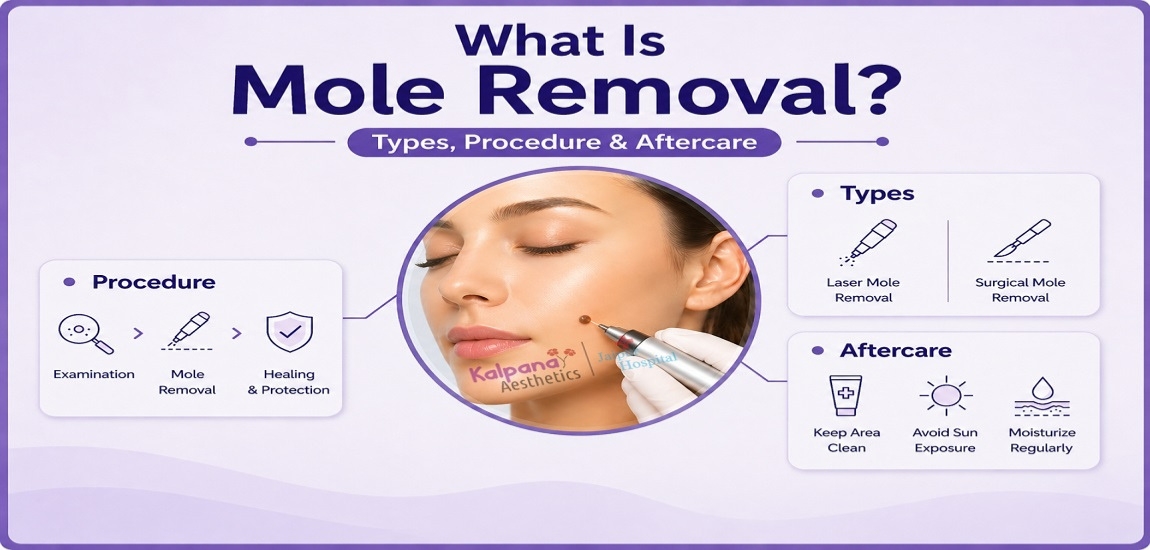
Types of Mole Removal Procedures
Surgical Excision
In the procedure, the mole is entirely cut out along with a small skin margin. This type is preferred in case of suspicious or cancerous moles. Further, there might be a need for stitches.
Surgical Shaving
In this surgical shaving, the mole is shaved off at the skin level with the help of a blade. No stitches are needed in this and is best suited for raised moles.
Laser Removal
In this laser procedure, the laser energy is used for breaking down the pigment in the mole. This type is best for removing small and non-cancerous moles with minimum scarring. The recovery procedure in this type is fast.
Radiofrequency or Electrocautery
Here, the heat energy is used for mole removal and is highly effective for cosmetic removal and controlling the bleeding.
Healing Process
After the types of procedure, let’s now read about the different stages of healing process.
- Starting Phase: You will observe a bit of swelling, redness, and slight discomfort.
- Initial Healing: in 1-2 weeks, the wound will begin to close and a scab may appear. Be sure that you don’t pick the swab.
- Complete Healing: In 2-4 weeks, the skin gradually heals and the redness reduces over time.
- Long-term Result: In the long-term, only a small scar is visible depending on the procedure performed and the healing response of the patient.
Aftercare Instructions
Proper aftercare is needed after the mole removal procedure is done. Here’s how you can do it.
Clean the Area Properly
Clean the surgery area gently as suggested by the expert so that it doesn’t get infected.
Use Prescribed Medicines
Apply the prescribed creams and ointments for better recovery.
Avoid Direct Sunlight
You must protect the area from direct sunlight to avoid pigmentation.
Do Not Pick or Scratch
When the scabs appear, do not remove them prematurely as this can lead to infection or scarring afterwards.
Follow Medical Advice
Always follow the advice provided by the doctor and go for regular visits.
Results
When it comes to results, it has been observed that the results are mostly permanent. There are very rare cases in which the mole regrows if it wasn’t completely removed during the surgery. The cosmetic surgery results are positive and satisfactory especially when they are done with modern techniques.
Conclusion
Mole removal is generally safe and most commonly performed dermatological procedure. While most of the moles are harmless, it is better to monitor and check them regularly. Taking the right decision on time can help in controlling and preventing any worsening. It is best to get routine check up done at the best cosmetic surgery hospital in Jaipur.
At Kalpana Aesthetics, we have the best expert who carefully exams the mole over the entire body. Accordingly, the best-customized treatment or the advanced mole treatment is suggested considering the health status of the individual. All the necessary tests are done to see if there is any presence of cancer. If you have observed any change in the mole, get in touch with us.
FAQs
1. Is mole removal painful?
Ans. Generally, the mole removal procedures are not painful as they are performed under the local anaesthesia. There may be slight pain during injection application but the procedure is done comfortably. There may be mild discomfort or soreness which goes off within a few days.
2. Will mole removal leave a scar?
Ans. There might be a small scar that appears after the mole removal and is usually visible in case of surgical excision. When it comes to modern techniques, proper after care can minimize the scarring significantly. There are laser and shaving methods as well which are likely to leave no visible marks.
3. Can a removed mole grow back?
Ans. A mole, once removed completely does not grow back. However, if it isn’t removed completely and some mole cells remain then there are chances of it growing back.
4. How much time is needed to heal after mole removal?
Ans. Around 1 to 3 weeks are required for mole removal to heal but it majorly depends on the mole size and the removal method used.
5. When should I get mole removed?
Ans. If you notice any changes in the size, shape or color of mole or experience pain and bleeding then you must consult an expert immediately. If the doctor suggests permanent mole removal, then go for it.