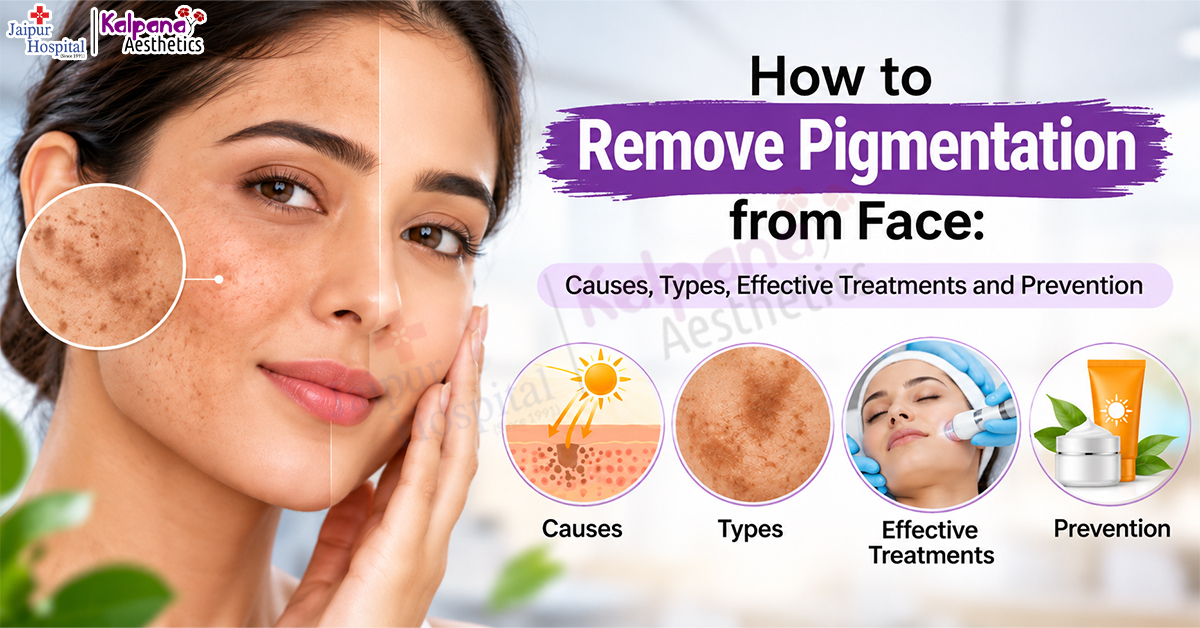
Facial pigmentation is one of the most common skin issues faced by people. It can be in the form of patches, dark spots, or uneven skin tone. Although pigmentation is not harmful, it can affect the confidence level or may indicate an underlying skin condition. Therefore, it should be examined by a dermatologist if it is interfering with your daily life. There are treatments available for most of the forms of facial pigmentation. Let’s read in detail about face pigmentation, its causes, types, treatments and prevention.
What Is Face Pigmentation?
Facial pigmentation refers to a change in the normal colour of the skin which happens due to accumulation or increase in the production of melanin. When the skin produces excess melanin, it leads to hyperpigmentation which shows in the form of dark brown or sometimes greyish patches.
Pigmentation can be individual spots, spread across face, symmetrical, related to inflammation or acne and triggered by sunlight. It should be understood that pigmentation is not a single disease and treatment is given according to the type and cause behind its occurrence.
What Causes Pigmentation on the Face?
There are several factors which lead to pigmentation on face, let’s read what these are.
1. Sun Exposure
Ultraviolet radiation or UV rays are one of the most common pigmentation causes. When the skin is exposed to sun, it stimulates melanocytes, the cells which are responsible for the production of melanin. When the skin is repeatedly exposed, the existing pigmentation may get worse and new spots may come up. This is why an effective treatment always includes sun protection.
2. Melasma
Melasma is yet another common pigmentation disorder in which brown or grey-brown patches are created on cheeks, forehead, upper lip or nose. It is mainly linked to hormonal influence and may become more visible during pregnancy or when certain hormonal medicines are taken.
3. Post-Inflammatory Hyperpigmentation
Dark marks are often seen after a skin injury or inflammation which commonly include acne, pimples, cuts, burns, eczema or aggressive cosmetic procedures. This cause is particularly found in people who have medium to dark skin tones.
4. Hormonal Changes
Hormonal fluctuation can affect the melanin production especially during pregnancy or when certain contraceptive medicines are consumed. This leads to pigmentation, particularly melasma.
5. Age and Skin Changes
With age, the skin exposed to sun continuously starts showing age spots known as solar lentigines. These occur in areas which are directly and regularly exposed to sunlight such as face, neck, and hands.
6. Certain Medications and Medical Conditions
There are certain medicines and medical conditions which can lead to changes in the skin pigmentation. If the pigmentation becomes visible suddenly and spreads rapidly along with other symptoms, then medical evaluation becomes necessary.
7. Skin Irritation
Repeated rubbing, using harsh skincare products and exfoliators can lead to skin irritation. This inflammation can result into pigmentation in some individuals.
You Can Read Also :- Skin Whitening Treatment: Benefits, Types, Procedure, Cost and Results
Types of Face Pigmentation
The types of pigmentation that have been generally seen in people are as follows.
1. Melasma
This occurs in the form of grey-brown symmetrical patches on the forehead, cheek, upper lip or nose. This condition can be persistent and may recur after the treatment.
2. Post-Acne Pigmentation
This includes dark marks which happen after the acne or inflammation is healed. This is a form of post-inflammatory hyperpigmentation.
3. Sunspots or Age Spots
These are brown spots which are caused by cumulative sun exposure and seen in sun-exposed areas.
4. Freckles
They are small and flat pigmented spots which are influenced by sun exposure and genetics. They become more visible during periods of continuous and direct sun exposure.
Effective Ways to Remove Face Pigmentation
Pigmentation can be avoided but the first step is to correctly identify the reason behind its occurrence. Providing solution without correct identification can lead to poor results or recurrence.
1. Make Sunscreen a Daily Habit
Sun protection is the best way to avoid and deal with existing pigmentation as prolonged sun exposure can make the condition worse. You should use a broad-spectrum sunscreen which is SPF 30 or higher. Reapply it if you staying outdoor for longer hours or sweating. Additionally, wear hats, sun glasses and carry umbrella and hop under shade whenever possible.
2. Avoid Picking or Squeezing Pimples
Do not pick or squeeze the pimples as this can lead to inflammation leading to post-inflammatory pigmentation. Treating the underlying reason can help in preventing the new pigmentation.
3. Keep the Skincare Routine Gentle
You should avoid harsh scrubs or exfoliators as these can cause skin burning and irritation. Instead use a mild cleanser, moisturizer and sunscreen to keep the skin healthy and create a positive foundation for pigmentation treatment.
4. Use Pigment-Reducing Ingredients
On the basis of the type of pigmentation and skin, dermatologists may suggest ingredients such as niacinamide, vitamin C, retinoids or hydroquinone which help in their reduction. These ingredients can take a few weeks or months to show results when they are consistently applied.
Treatment Options for Face Pigmentation
If you have persistent or significant pigmentation then you should get it evaluated by a dermatologist who will provide the appropriate face pigmentation treatment.
1. Topical Treatments
There are certain creams that may be prescribed according to the condition. These are helpful in treating melasma, and poor inflammatory hyperpigmentation. Hydroquinone is also one of the most commonly prescribed agents which should be used under the guidance of dermatologist. Similarly, retinoids help with the skin-cell turnover and improving the effectiveness of the treatment given.
2. Chemical Peels
Chemical peels can help in improving the pigmentation by removing and altering superficial layers of the skin. But the choice of chemical peel is very important as wrong peel can drastically worsen the situation.
3. Laser and Light-Based Treatments
Laser and light-based treatment devices are used to treat the pigmentation and can help in reducing the sunspots. But laser treatment should not be considered as the best option because in some cases the pigmentation can recur and the procedure can lead to post-inflammatory hyperpigmentation.
4. Combination Treatment
In most of the cases, a combination treatment is given to get best results. This combination treatment includes sun protection, skincare as per need, prescription treatment and procedure if needed.
You Can Read Also:- How to Remove Acne Scars Naturally in a Week?
How to Prevent Pigmentation from Returning
Treating pigmentation is not enough as there are chances of it returning back. Pigmentation prevention and additional sun protection is necessary for safety.
1. Protect Your Skin from the Sun
Always use a sunscreen with correct SPF to protect your skin from the harmful rays of sun. It should be accompanied by physical protection like hats, scarf, gloves and coat when going outdoors.
2. Treat Acne and Inflammation Early
If the pigmentation is due to acne, then it is better to control acne to prevent dark marks.
3. Avoid Unnecessary Skin Irritation
Do not use products which irritates your skin as it can lead to inflammation and pigmentation.
4. Be Patient
Pigmentation happens gradually and doesn’t disappear overnight. They take time to heal and therefore, you should patiently follow the treatment that has been prescribed.
5. Follow a Long-Term Skincare Plan
You might be prescribed a skin maintenance treatment by the dermatologist which you should follow after the pigmentation has improved to avoid recurrence.
Conclusion
Facial pigmentation is a very common skin issue which occurs majorly due to consistent sun exposure. However, it can be treated after the cause is determined, for best results. Additionally, you might be required to follow a proper skin care routine, and sun protection to avoid recurrence. If you have been facing any of the pigmentation symptoms, connect with a qualified and experienced dermatologist.
At Kalpana Aesthetics, our dermatologist Dr. Vishal Purohit has been handling and treating face pigmentation cases successfully. He believes in understanding the underlying cause so that the right treatment can be given to get fair results. If you also want to consult him, book an appointment right away.
FAQs
Q1. Can pigmentation be removed permanently?
Ans. No, not always. While some pigmentation like sunspots can respond well to the treatment, conditions like melasma can be chronic and reoccur even after a successful treatment.
Q2. Which treatment works best for pigmentation?
Ans. There is no single treatment for pigmentation. The treatment is given to the patient on the basis of the condition whether it is melasma, sunspots, post-acne pigmentation or freckles. While for some sun protection and topical treatment is enough, others might require chemical peeling or laser treatment.
Q3. How long does pigmentation treatment take?
Ans. The treatment duration depends on the cause, depth, and duration of pigmentation. Some pigmentation may improve in several weeks; other conditions may take many months to heal.
Q4. Can pigmentation return after treatment?
Ans. Yes. In cases of melasma and pigmentation which happens due to continuous exposure to sunlight, recurrence is common. Proper sun protection and maintenance routine can be helpful.
Q5. Is laser treatment safe for pigmentation?
Ans. Laser treatment can be safe and effective when it is performed by a certified practitioner, appropriate device is used and settings are correctly chosen as per the condition of skin. However, in some people who are prone to pigmentation, any inappropriate laser treatment can lead to irritation.